
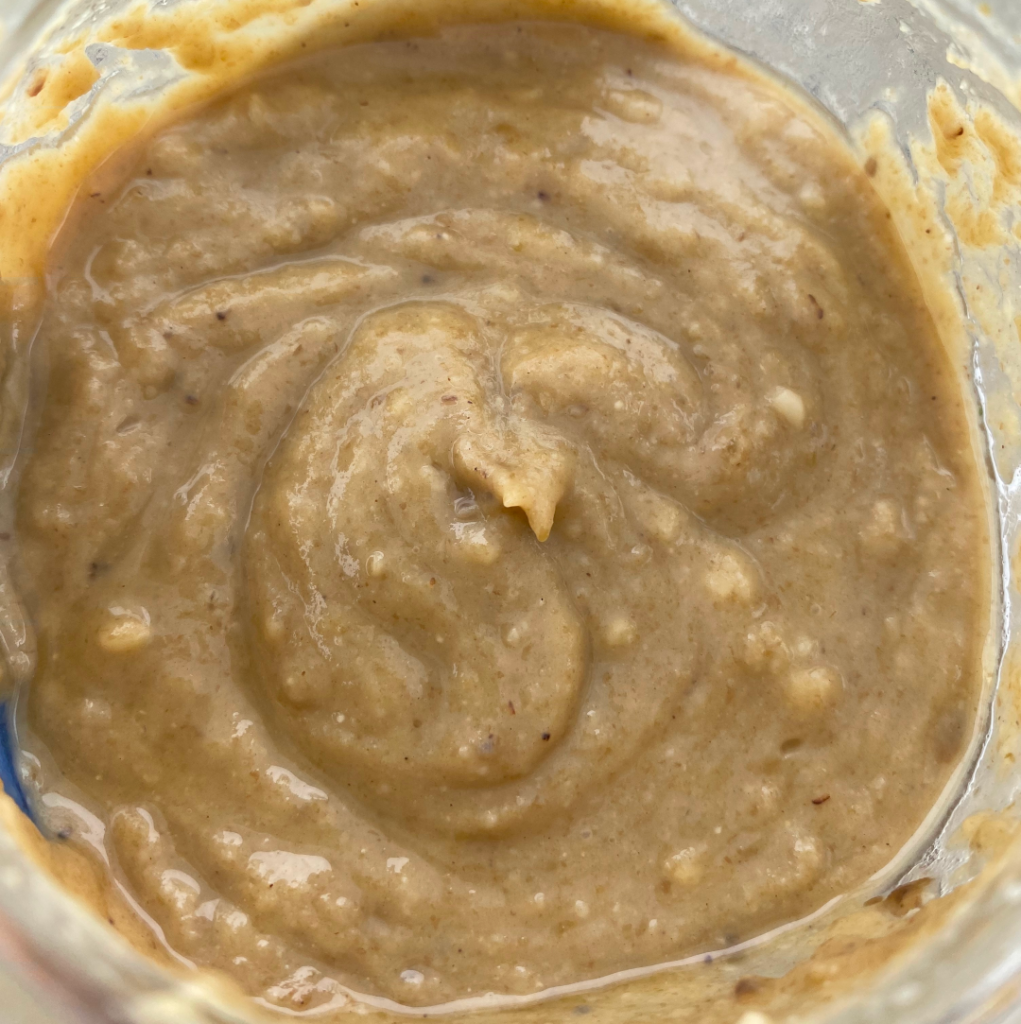
Miso is an umami-rich paste made by mixing beans (historically, soybeans), salt, and koji, a grain (usually rice) which has been inoculated and fermented with a mold, Aspergillus oryzae. The flavor and complexity of miso is unmatched even compared to other fermented dishes. It is at once savory, sweet, salty, and powerful.
White miso is lighter and sweeter than its more popular and traditional cousin, red miso (akamiso). That’s due to its shorter fermentation time (weeks instead of months or years), and higher ratio of koji (which is carbohydrate-rich and produces a sweeter finished product). Many modern commercial white misos are “cooked” rather than fermented, creating a finished product in a matter of days, not weeks.

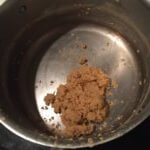
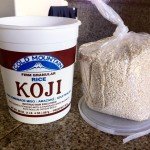
The easiest way to make miso is to start with pre-made dried koji. Local Asian markets usually carry dried “firm granular” koji. You can also find online merchants like this one.
Learn more about making your own koji here.
The making of miso…
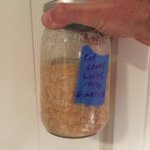
Recipe
White (shiro) Miso
Equipment
- food processor or high speed blender
Ingredients
- 1 3/4 cups (300 g) dried beans (chickpea, adzuki, or other legume)
- 2 1/2 cups (567 g) 1 tub, about 3.5 cups dried firm granular or 3 cups (650 g) fresh koji Here is more about koji
- 5 tbsp (75 g) fine sea salt
- 1 tbsp mature miso
Instructions
Prepare Mixture
- Soak the beans in 10 cups (2.5 liters) of filtered water overnight (or up to 24 hours).
- Drain the beans well.
- Bring 1/2 gallon (2 liters) of filtered water to a boil, then add beans and reduce heat to simmer. Cook until soft, about 30 to 60 minutes (exact cooking time varies by bean).
- Save the bean cooking liquid. Place a colander over another pot, mixing bowl or other heat-proof container, then use it to drain the beans and capture their cooking liquid. Place the drained beans in a large mixing bowl or put them back in the cooking pot once it has cooled down.
- Let the cooking liquid mixture cool down to 100°F / 38°C.
- Mash the beans, leaving about 1/4 of them intact.
- Reserve 1/2 tsp (3 g) of salt for later, and stir the rest of the salt into the bean mixture.
- Add the mature miso to the beans. Stir until it’s well incorporated.
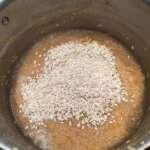
- Stir the koji into the bean mixture.
- Once the cooking liquid has cooled down, add 2 1/4 cups (540 ml) of liquid to the mixture if using dried koji, or 1 1/3 cups (310 ml) liquid if using fresh koji.
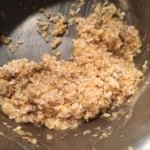
- Mix well for 5 minutes in order to allow the koji to absorb the cooking liquid.
- Once the miso is well mixed, you should be able to form it into balls that hold together without any liquid coming out when you gently squeeze them. If the miso crumbles in your hand, add more cooking liquid to the mixture, stir well, and then try the squeeze test again.
Ferment
- Pack the vessel with the miso mixture, ensuring that there are no air bubbles as you go. Leave 1 inch (2.5 cm) of room between the mixture and the top of the vessel.
- Tap the vessel it on a folded towel or wooden cutting board several times to remove any air pockets. Make sure the top surface is even and flat.
- Add a layer of salt to the top.
- Add a weight (fermentation weights, a plate, etc.) to the top of the mixture. This will press the miso down and allow the tamari to rise to the surface during fermentation.
- Set the vessel on a plate or in a shallow food storage container.
- Affix a label to the side of your vessel with the current date.
- Store the miso at warm room temperature (ideally between 72 and 80°F / 22 and 27°C) for 4 to 8 weeks.
Post Fermentation
- Remove the lid and weights. Scoop off any funky mold from the top surface of the miso.
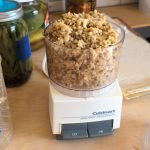
- Blend the miso into a smooth paste using a food processor or high-speed blender. Add a small amount of filtered water if mixture is too thick to blend.
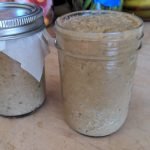
- Pack the miso into glass jars. If you’re using a metal lid, place a layer of parchment or wax paper between the metal lid and the lip of the jar before you secure the jar.
- Store the miso in the refrigerator, where it will last for several months.
Post-Fermentation
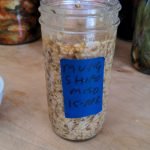
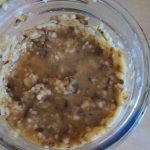
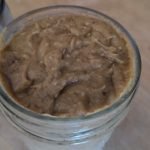
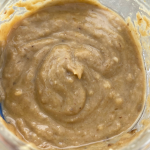
After miso has been fermented, I like to blend it into a smooth paste. It is easier to incorporate it into dishes as a paste than when it is chunky.
Ready to learn more? Take one of our classes!
-
Sale!

Fermenters Club® Academy Course Gift Certificates
Price range: $18.00 through $179.00 Select options This product has multiple variants. The options may be chosen on the product page -
Miso Master Class [Gift Voucher]
$49.00 Add to cart

![Miso Master Class [Gift Voucher]](https://fermentersclub.com/wp-content/uploads/2019/06/miso-patch-300x300.png)

Author and founder of Fermenters Club. I’ve been fermenting food for 14 years.
In 2024, I published my first book, Fearless Fermenting.
When not stuffing things into jars, I enjoy permaculture gardening, cooking, yoga, writing, and studying cosmology and esoteric traditions.
A few questions
Am I to use a fermentation lid or ferment with no lid?
Do you pour off the tamarind or blend it in?
You can either use a lid, or put the whole thing into a bug-proof breathable sack (like a well-stapled paper bag) and keep the lid off.
I definitely prefer to stir the tamari back into the paste!
I made a miso paste in the past and I recall there being more than just beans, I recall dry roasting some kind of wheat and/or barley powder (milled) or maybe it was wheat berries. At the time also, I was leery of using any soy and I used 3 different kinds of beans…THEN all that was mixed into what is about step-6 in your “Prepare Mixture” section above. Why not do that here?
Also, I think I was the only other comment above that is John asking if you don’t have raw unpasteurized miso paste to add. Though I’m not sure how I did that back then as I just bought this course….though I guess I can access this recipe for free and it is just linked in the course.
Yes, you also add koji (step 9) to this mixture. Koji is the inoculated grain (usually rice but could be other grains as you mentioned).
I know barley bran is added to miso for cured Japanese pickles, like cured daikon – is that maybe what you are thinking of?
If we don’t have any mature, non-pasteurized miso do we just skip that part or do we need to add extra salt. thanks!
Seed miso is less important for making white miso than it is for red miso, due to its shorter fermentation time. If you don’t have any, just make it without. If your koji is strong, the miso should still turn out fine!