
✌ No-Nukes ☮ 3 Pepper Cukes
Using three chile peppers in various forms, these no nukes cukes hold some heat, while simultaneously being balanced by the inherent coolness of the cucumber. Want it hotter? Leave the …

Using three chile peppers in various forms, these no nukes cukes hold some heat, while simultaneously being balanced by the inherent coolness of the cucumber. Want it hotter? Leave the …

What is kombucha? Kombucha (kahm-BOO-chuh) is a fermented tea drink that probably originated in ancient China over two thousand years ago. The active culture which transforms the tea into kombucha is …

Milk kefir (pronounced keh-FEER, or KEE-fur, I’ve even heard it as KEFF-er) is made with the help of a colony of bacteria and yeasts (aka a SCOBY) which is organized …

Last autumn, I got to pick some fresh olives from a friend’s trees! (I think they were Mission and maybe Arbequina varietals.) Some were green, some were black, and others …

Curtido (sometimes spelled cortido) is a Salvadoreña (from El Salvador in Central America) version of sauerkraut. The word encurtido means pickle in El Salvadorean Spanish. In its native country, the …

Brine is used in fermentation to keep the contents safe. Water acts to keep aereobic (air-loving) microbes out of the party, and salt regulates which microbes will survive and thrive. …

Sauerkraut was traditionally prepared in the autumn and then stored fermented all winter long in a cellar where the earth temperature kept it cool but above freezing. People would consume …

If you find yourself growing both cabbage and cucumbers at the same time, this is a great way to have the “best of both worlds” in terms of classic fermented …

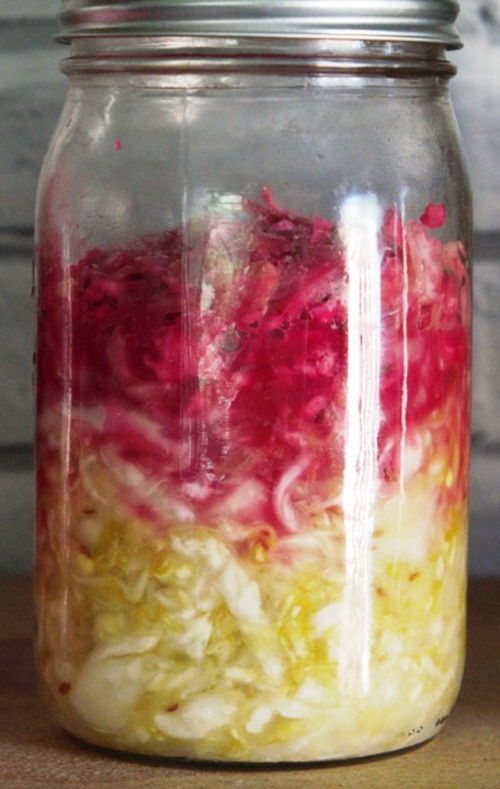
Sauerkraut is a fermented cabbage dish. In its simplest form, it is just cabbage and salt. But you can add other vegetables (or fruits) as well as your own seasonings. …

You made your take-home jar of sauerkraut at the San Diego Fermentation Festival. Here are some tips to ensure it turns out great! Be sure to “burp” the jar within …
Hey, Fermenter!
Subscribe to our Newsletter now to receive your
Printable Sauerkraut Recipe Cards!
Twice a month, we will regale you with events & workshops, fermentation techniques, tips, tricks, new recipes, and the latest news and research about food fermentation.