

Most of the microbes that do the fermentation work are like us; they prefer room temperatures.
If it’s cool enough in your house during cold months (say, below 68 °F/20 °C), then you may notice that ferments take an extra long time to transform, if at all.
We use the refrigerator as a “pause button” or “super-slow-mo button” on our ferments when we consider them “finished”. In those temperatures, microbes slow down significantly (but are not killed off), preserving the probiotic value of the fermented food or beverage.
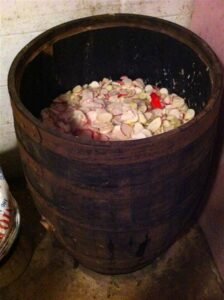
Back in the days before AI, refrigerators and Same-Day Prime, our ancestors had to adapt to their environment. No less clever than we are today (despite the handicap of not having ChatGPT informing them and mollycoddling their egos), they often stored ferments in a basement, cellar or root cellar, which keep a constant cool temperature all year round (“earth temperature” is typically 55 °F/13 °C). Here, vegetables would ferment ever so slowly, in fact all throughout the winter and spring!
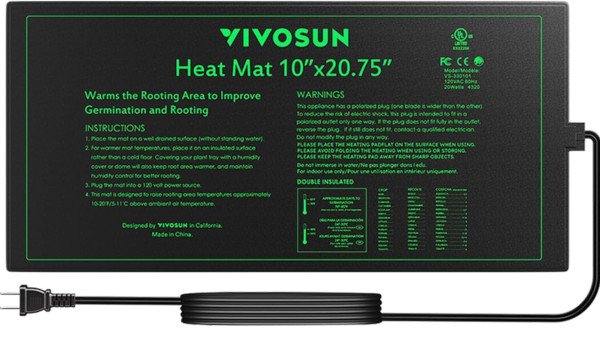
I found a simple device that helps keep ferments in the appropriate range. It’s a seedling mat used by gardeners to help germinate seeds! These raise the temperature of items which sit on them by about 10 °F. This device hits most of my ideal criteria: it’s inexpensive, durable, easy to clean, and multi-purpose!
I use one regularly in wintertime for:
- brewing kombucha (both primary and secondary fermentation)
- preparing my sourdough starter after feeding
- water kefir
- dairy kefir
- sprouting seeds (well I would, but it never freezes where I live).
Common Ferments and Temperature Ranges
| Ferment | Ideal Fermentation Temperature Range (℉) | Ideal Fermentation Temperature Range (℃) | Notes |
|---|---|---|---|
| Brined Vegetables (including sauekraut, kimchi, pickles) | 55 to 80℉ | 13 to 27℃ | |
| Kefir (dairy) | 72 to 76℉ | 22 to 24℃ | |
| Koji | 86 to 91℉ | 30 to 33℃ | Must also create high humidity (75%) |
| Kombucha (primary fermentation) | 68 to 80℉ | 20 to 27℃ | |
| Kombucha (secondary fermentation) | 76 to 80℉ | 24 to 27℃ | |
| Tempeh | 85 to 91℉ | 30 to 33℃ | Must also create high humidity (75%) |
| Water kefir (tibicos) | 68 to 78℉ | 20 to 25℃ | |
| Yogurt (Bulgarian) | 110℉ | 43℃ |

Author and founder of Fermenters Club. I’ve been fermenting food for 14 years.
In 2024, I published my first book, Fearless Fermenting.
When not stuffing things into jars, I enjoy permaculture gardening, cooking, yoga, writing, and studying cosmology and esoteric traditions.
Fermentersclub.com, fermentingclub.com, what’s the difference between. I have two products that refer to fermentingclub.com/vip (indicates JOIN HERE:). These items were purchased 10+ years ago when I wanted to begin fermenting, but needed to wait. Now 80 years old, need to start.
The makers of the easy fermenter tagged us a few years ago, so their website (fermentingclub.com) refers to our website. We do not manufacture or are in any way related to them, but we do support Fermenters of all kinds! Glad you’re getting started at 80 years young and we hope you find some helpful information on our site!