
You can’t win ’em all, Fermenters. Sooner or later, a ferment is going to go wrong. Terribly, terribly wrong (Okay, maybe we’re being a bit dramatic).
The fermentation technique is simple but there are some variables involved, including:
- Time allowed to ferment
- Ambient temperature (below 75° F/24° C is recommended for veggies)
- Quality of Ingredients (fresh picked; organic is best, or at least spray-pesticide free)
- Amount of each ingredient used
- uniformity of size of ingredients
- Salinity (saltiness) of the brine
Here’s the breakdown of a fermentation batch I made which did not make it to the fridge (the ultimate goal of any ferment).
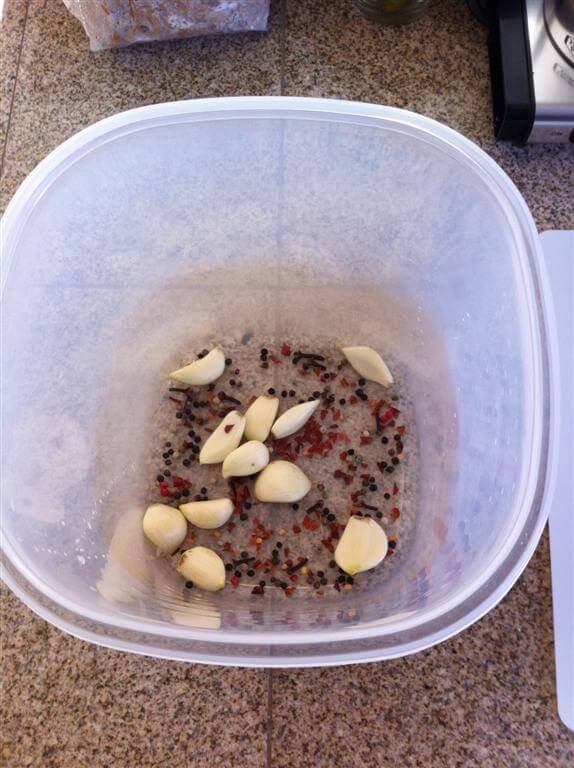
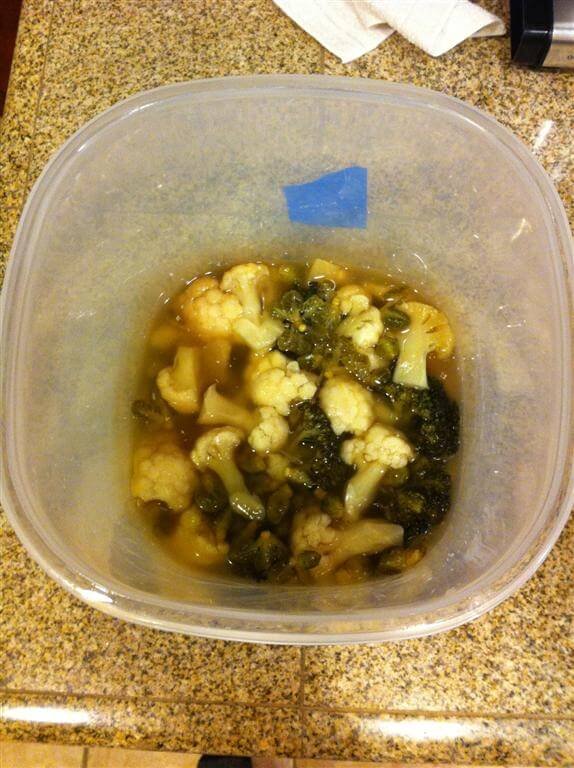
Ingredients Used: chopped broccoli, chopped cauliflower, Brussels sprouts, garlic cloves, peeled, fresh thyme, mixed peppercorns, brine from a previous (sauerkraut) ferment
Progress
- Day 26: This batch was humming along nicely. Everything looked fine. However, the veggies weren’t losing their crispness (which I thought was a bad sign). I probably could have sliced them thinner, as broccoli and cauliflower are both pretty dense veggies.
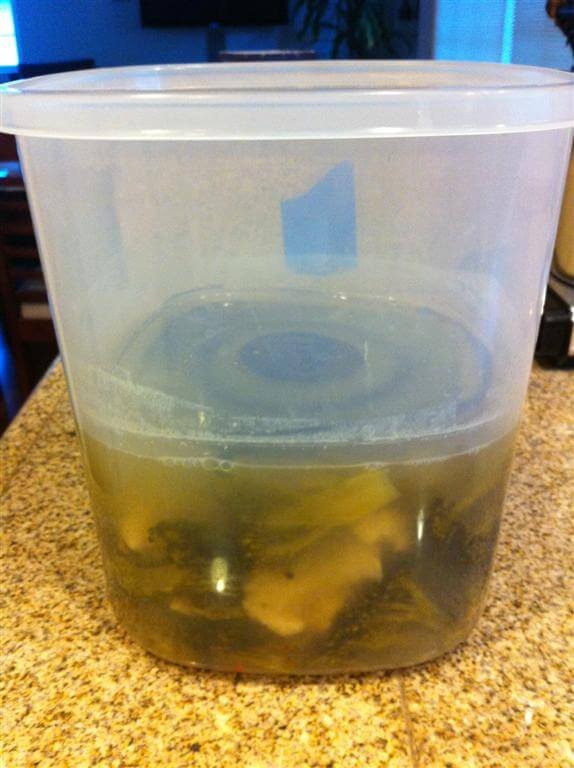
- Day 30: The veggies were extremely salty, as some of the water had evaporated, concentrating the salt content. I added more fresh water to try to restore the correct salinity.
- Day 35: BLECCHH!! There was an acrid smell coming from the fermentation closet. These were inedible.
Lessons Learned
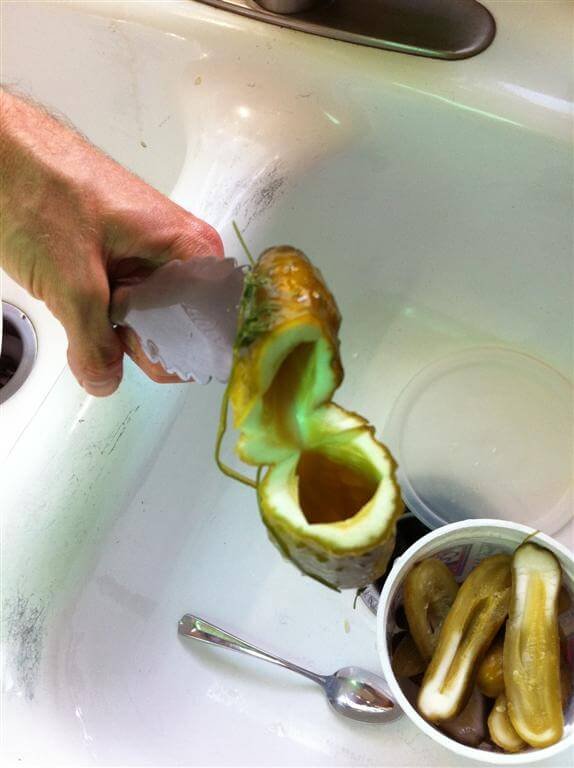
- Use FRESH ingredients! I once made a batch of pickles using cucumbers that were two weeks old when I started. Then I waited 3 weeks to ferment. Only then did I discover that they were completely hollow!
- A little garlic goes a long way; I used WAAAY TOO MUCH! (2 cloves would have been adequate for this batch)
- Cut veggies into thinner pieces
- Cut the veggies to a uniform size so they all ferment together, especially if using more than one kind of vegetable
- Taste and add brine as needed more often throughout the process
- Respect the complexity of the biological processes and know that you can’t always control everything
- Trust your Senses! If it smells or tastes off, compost or pitch it!
Now it’s your turn, Fermenters. Any ferments gone bad?

Author and founder of Fermenters Club. I’ve been fermenting food for 14 years.
In 2024, I published my first book, Fearless Fermenting.
When not stuffing things into jars, I enjoy permaculture gardening, cooking, yoga, writing, and studying cosmology and esoteric traditions.
Aauuuggh, yes! Just this week! My beet kvass came out…syrupy. :0/ I think I chopped it up too finely. I did taste it, and it tastes just as it always has but the slight syrup texture was too much of a turn off…Starting over. Good thing I have kombucha, tibicos and dairy kefir to make up for it until it’s done ‘brewing’. 😀
Ahhh, the beet kvass that has the texture of egg whites! Know it well! I make 2 quarts of beet kvass every week and you are right, you cannot chop the beets. Just dice in no smaller than 1/2 in dice and you won’t have that slimy result. I’ve read online, that some folks actually like that. I’ve yet to have a batch that actually had a head of foam on a glass like I’ve seen online as well. 4-8 oz of kvass every day will cure anything!