
The word mustard derives from Latin, mustum (fermented wine) + ardens (“hot” seeds).
The well-known spicy condiment is made from the seeds of either the white (aka yellow) mustard plant (Brassica hirta), and/or from its spicier cousin, brown mustard (B. juncea). The active pungent compound in white mustard is sinalbin (think “albino”), which is less pungent than sinigrin, the compound active in black and brown mustard. I like to use a mixture of white and brown seeds for this recipe.
Botanically, there is also black mustard (B. nigra), the spiciest of the bunch. It contains more sinigrin than brown mustard, but the plant is small comparatively, making it less practical to cultivate. It is not commonly found in North America, except, interestingly, as a wild plant all over California, where it was planted by early Spanish settlers! Sometimes, brown mustard seeds are marketed as black mustard seeds. So for your shopping list, brown and black mustard seeds are synonymous.
Water revives the enzymes from dried/powdered mustard, and will create the pungency (aka spiciness, but distinct from the heat sensation provided by the capsaicin, found in peppers) that mustard is known for. Heat is known to destroy the volatile compounds, so if you are using mustard when cooking, add it at the end.
Conversely, acids slow this enzymatic process, but they also slow the dissipation of the volatile compounds, making the finished mustard stay pungent longer. So, with a little experimentation, you can tweak mustard to just the flavor profile you want (by waiting just a few minutes, or a few hours), then “lock it in” by adding an acid (e.g. pickle brine or vinegar).
Even though B. hirta is known as yellow mustard (likely due to the color of its flowers), its use isn’t what makes our familiar mustard yellow colored. Turmeric is the spice responsible for giving us that familiar mustard yellow color which is so ubiquitous in store-bought prepared mustard varieties. If you don’t add turmeric, you’ll notice the finished mustard is more pale (almost grey) in color. This is common among European style mustards.
I like adding honey to offset some of the pungency and balance it out. This recipe uses less than what one might consider a “honey mustard”. If that style suits your fancy, feel free to add more honey.
Mustard
Ingredients
- 35 g / 3 Tbsp. yellow (white) whole mustard seeds
- 35 g / 3 Tbsp. brown (black) whole mustard seeds
- 40 g about 1/2 cup yellow (white) mustard powder
- 2 to 3 cloves garlic
- 30 ml / 2 Tbsp. pickle or sauerkraut brine fresh liquid whey, or plain kombucha
- 15 ml / 1 Tbsp. fine sea salt plus more to taste
- 175 ml / 6 fl. ounces filtered water
- 50 g / 35 ml / 3 Tbsp. honey OPTIONAL
- 5 ml / 1 tsp. turmeric powder OPTIONAL
Instructions
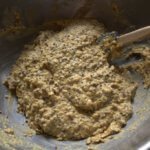
- Add brown and yellow seeds, water and garlic cloves to bowl of a food processor or blender. Puree until mixture thickens up, which may take anywhere from one to 10 minutes depending on the power of your blender or food processor.
- Add mixture to mixing bowl.
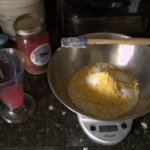
- Mix in mustard powder. To achieve a mellower/less spicy mustard, wait 10 minutes before adding remaining ingredients.
- Add salt, turmeric, honey and acidic liquid (brine, kombucha or whey) to bowl and mix well.
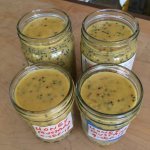
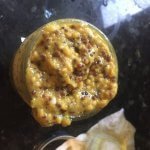
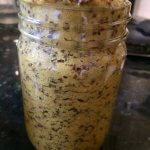
- Dispense mixture into a wide mouth pint or larger jar.
- Tightly secure lid and ferment at room temperature 2 to 4 days. The mixture will continue to thicken up for a day or so as the mustard powder absorbs the liquid.
- Store in refrigerator for up to a year.

Author and founder of Fermenters Club. I’ve been fermenting food for 14 years.
In 2024, I published my first book, Fearless Fermenting.
When not stuffing things into jars, I enjoy permaculture gardening, cooking, yoga, writing, and studying cosmology and esoteric traditions.