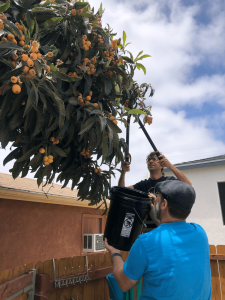
I’m lucky enough to have a 25-foot tall loquat (Eriobotrya japonica) tree in my yard (no, not kumquat).
It’s a prolific leafer, so I get free carbon for my compost pile all year long! The tree’s leaves have medicinal properties, too! (easily made into a tea). The fruit has a fuzzy skin, blushes like a stone fruit, and has 1 to 5 shiny seeds inside.
Every spring, from mid-March through mid-May or so, its branches hang heavy with this unique, pear-like fruit.


It’s become a rite of spring to gather and collect dozens, maybe hundreds of pounds of this delicacy.
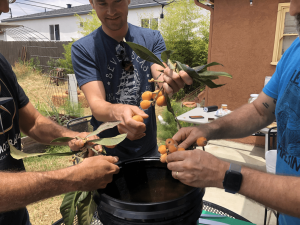
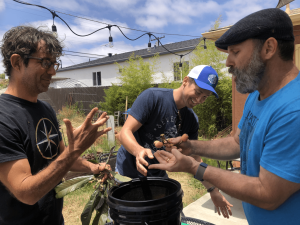
Something must be done with them, as they ripen within a relatively short period and are very perishable.
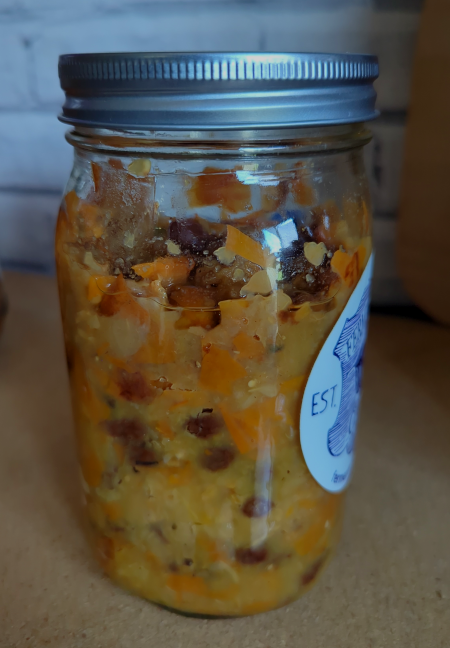
You can make a delicious loquat jam with them, or make a fermented savory/sweet condiment, similar to peach-mango chutney, useful in many dishes!
Loquat Chutney
Ingredients
- 2 lbs (900 g) fresh loquats
- 1/2 cup (60 g) raisins (any variety)
- 2 tbsp (30 ml or 40 g) raw honey
- 2 garlic cloves
- 1 fresh jalapeño or other chile pepper, optional
- 2 tsp (10 ml) sea salt
- 2 tbsp (30 ml) pickle or sauerkraut brine, or lemon juice, vinegar, or kombucha
- 2 tsp (10 ml) black, white, or mixed peppercorns
Instructions
Prepare
- Rinse loquats to remove dirt & dust. Separate seeds from flesh (I keep the membranes and flower end, but you can remove those if you don't like the texture.) Discard or compost seeds.
- Break down the flesh by cutting into small pieces. You could also pulse them in a food processor or with a stick blender, but I found that crushing them with a potato masher a few times in the pot works fine to help break them down.
- Cook over medium heat for about 20 minutes, or until most of the liquid cooks out. Let cool.
- To a mason jar, add cooled loquats.
- Add honey, vinegar/brine, lemon juice/kombucha to a wide-mouth quart-sized mason jar.
- Chop raisins and add to jar.
- Add diced fruit to jar.
- Mince garlic and add to jar.
- If using jalapeño, cut top off, then lengthwise in half. Remove seeds and membranes with a knife, or leave in for a hotter chutney. Mince pepper and add to jar.
- Crush or crack peppercorns or leave whole, adding to jar.
- Stir together well.
Ferment
- Secure ring and lid on jar.
- Leave in a warm spot in your kitchen. "Burp" the jar every day or so to release the CO2 buildup pressure.
- After a few days, you should see bubbles form, letting you know that fermentation is underway. Stir contents together.
- Taste! When you’re happy with how tangy it tastes, tighten lid and store in refrigerator.
- Contents may separate from liquid. Stir before using.
- Keeps up to a month in refrigerator.

Author and founder of Fermenters Club. I’ve been fermenting food for 14 years.
In 2024, I published my first book, Fearless Fermenting.
When not stuffing things into jars, I enjoy permaculture gardening, cooking, yoga, writing, and studying cosmology and esoteric traditions.